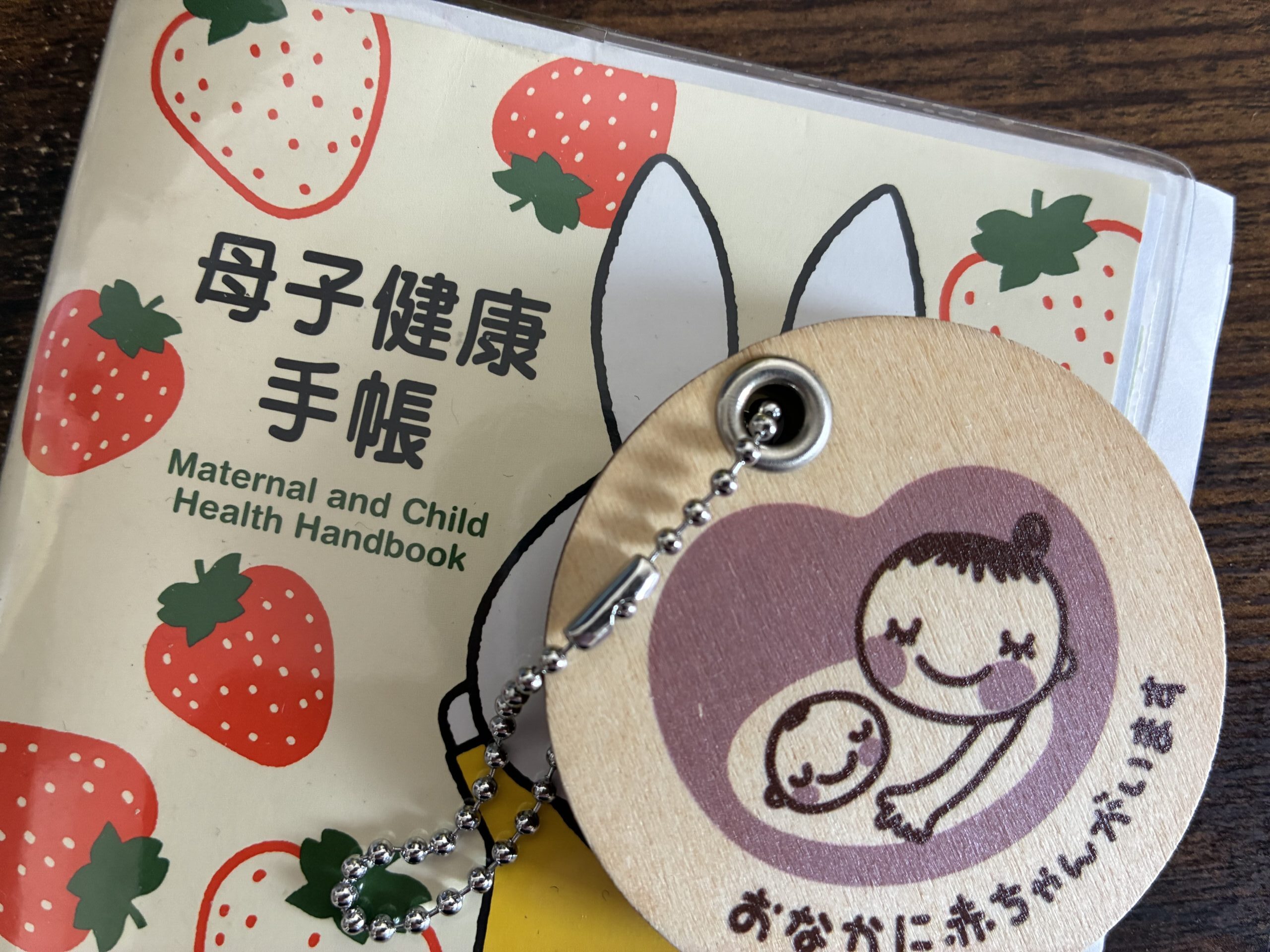
Once I found out I was pregnant via positive pregnancy test, the first thing I did was to get an appointment with my gynecologist in order to confirm my pregnancy. My gynecologist confirmed I was pregnant (around 8 weeks!), and told me to do the following:
- Obtain a Maternal and Child Health Handbook (母子手帳, boshi-techo) at the municipal office
- Choose which hospital to give birth at
The Maternal and Child Health Handbook (母子手帳, boshi-techo) is used to continuously keep track of the health of both the mother and baby throughout the pregnancy, and also records the baby’s growth, vaccinations, etc. post birth. It’s essential that you carry the handbook with you at all times so that you can share the vital information with the doctor at any time, especially in case of emergency.
Because my gynecologist worked at a clinic that did not specialize in birth delivery, I had to find a hospital to give birth. Looking back, since it was my first pregnancy I didn’t have enough knowledge about how important of a decision this was going to become. Although giving birth at St. Luke’s was one of the best choices I made throughout my pregnancy, I wish I had had more insight on how to decide.
Here are things to consider when choosing the right hospital for you:
- Do you want to give birth at a large hospital, or a smaller clinic? Large hospitals often handle childbirth in pregnant women of all kinds (including multiple births, complications, high risk, etc) but lack a homey atmosphere. On the other hand, smaller clinics can attend to your needs in a cozy atmosphere, but may require you to transfer to a large hospital in case of any complications or abnormalities that arise during your pregnancy.
- How far along are you in your pregnancy? Popular hospitals (such as 順天堂= Juntendo, 聖路加=St. Lukes) only allow reservations to be made early in the pregnancy (around 8 weeks).
- Do you want to use epidural? How about induced labor? Not many hospitals offer epidural, especially for 1st time mothers. For example, I gave up giving birth at Showa University Hospital since they only allow epidural for multiparous mothers.
- Do you want a private room throughout your delivery and post birth? Hospitals with a private room, shower, toilet, etc. would be the calmest way to recover post birth, but can lead to a large bill.
- Is the hospital close enough that going to prenatal checkups will not be a burden? Prenatal checkups at large, busy hospitals can be a burden, with the long waiting hours (even with an appointment!) and inflexible appointment times. Some large hospitals incorporate a semi-open system, where the mother can go to a partnering clinic for prenatal checkups instead of the large hospital if the pregnancy is going smoothly without any complications.
- Does the hospital have English speaking staff? Do they accept non-Japanese speaking mothers?
Because I lived in the Chuo district when I found out I was pregnant, I did not have much to choose from, especially since I wanted to use epidural. I will write about how I made my decision and my experience at St. Luke’s in another post.

Comments